
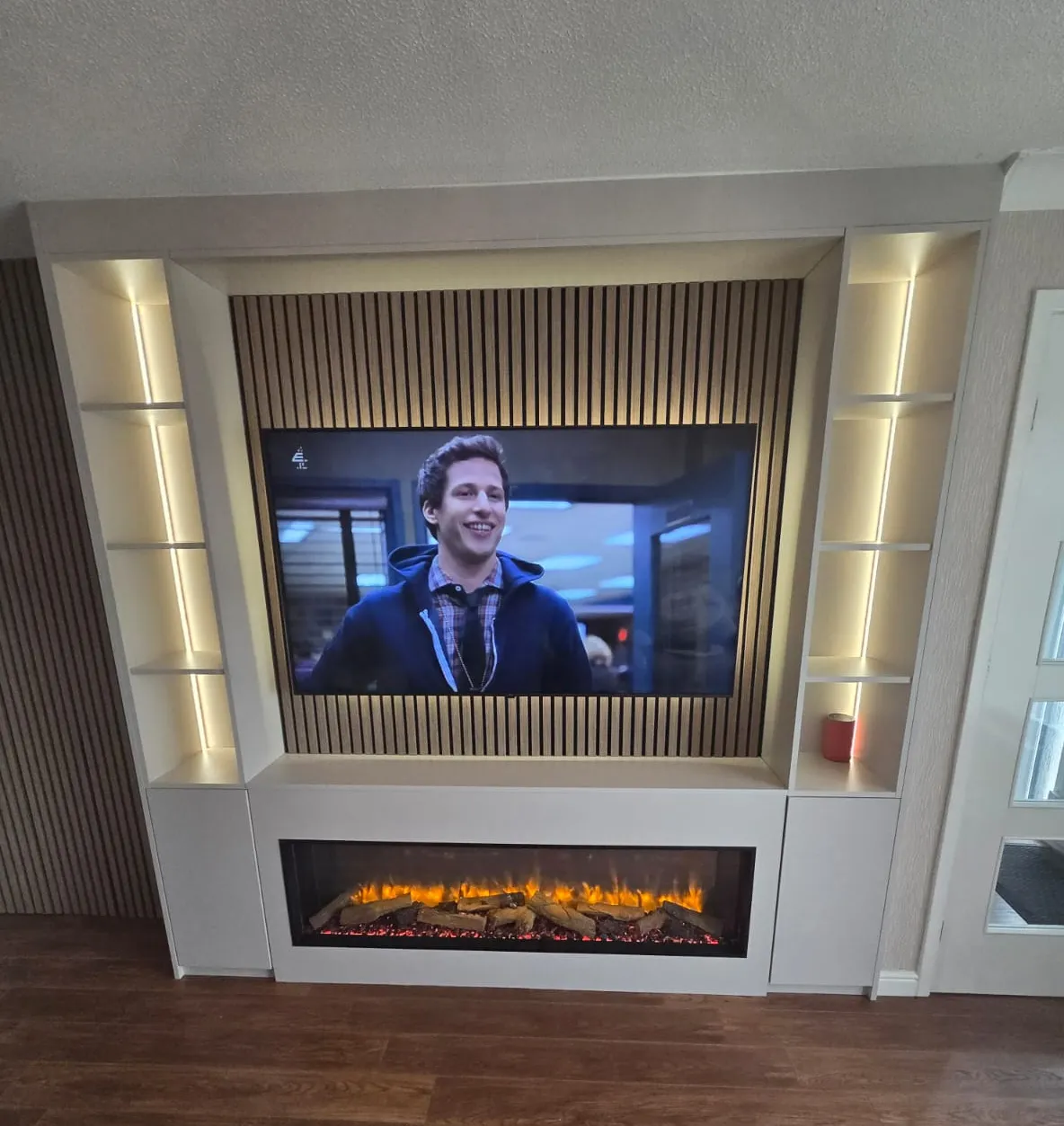
Transform Your Space with Custom Furniture in Glasgow
Custom Fitted Furniture in Glasgow – Bespoke Designs and Space-Optimising Solutions
Custom fitted furniture in Glasgow refers to made-to-measure joinery and cabinetry designed to fit the exact dimensions and style of a home, transforming awkward spaces into organised, purposeful areas. This guide explains how bespoke fitted furniture—also called built-in furniture or fitted furniture—optimises space, improves storage, and elevates interior aesthetics for Glasgow homes. Readers will learn practical design approaches for alcoves and sloping ceilings, the main categories of fitted furniture available, typical materials and finishes, how the design-to-installation workflow works, realistic cost drivers, and where to view examples and reviews locally. The article uses local context and current practices to show why a tailored approach outperforms off-the-shelf solutions for irregular rooms, multi-functional spaces, and media-focused living areas. Throughout, you'll find concrete examples, comparison tables and actionable lists to help plan fitted wardrobes, home office, media wall or made-to-measure cabinet project in Glasgow.
What Are the Benefits of Custom Fitted Furniture in Glasgow?
Custom fitted furniture delivers precise space optimisation by matching joinery to your room’s exact measurements, turning unusable nooks into storage-rich zones and improving circulation. The mechanism is simple: made-to-measure cabinetry uses every millimetre, integrates components like shelves and drawers, and embeds functional elements (hinges, integrated lighting) to increase utility and durability. The result is a cleaner, more organised home with storage tailored to your lifestyle and a cohesive aesthetic that raises perceived value. Below is a concise list-style summary of primary benefits to target featured-snippet style answers and quick decision-making.
Custom fitted furniture in Glasgow offers several direct benefits:
Maximised Storage: Precisely measured units reclaim alcoves, under-stairs voids and vertical space for efficient organisation.
Tailored Aesthetics: Bespoke finishes and door styles create a seamless look that complements existing décor.
Improved Functionality: Integrated shelving, drawers and cable management reduce clutter and enhance daily use.
Long-Term Durability: Higher-quality materials and joinery deliver longevity and a better lifetime cost than disposable units.
These benefits point directly to practical design choices; the next subsection describes how bespoke design techniques make that optimisation possible.
How Does Bespoke Design Maximise Your Home’s Space?

Bespoke design maximises home space through precise measurement, zoned storage and modular thinking that treats furniture as architecture rather than freestanding pieces. Designers map needs—clothing, media, workspace—and then allocate internal fittings like adjustable shelves, soft-close drawers and specialised shoe or accessory racks to match those needs. Techniques such as end-to-end built-ins for full wall coverage, stepped shelving for sloping ceilings and recessed units for alcoves convert awkward geometry into useful storage. Practical examples show a corner wardrobe gaining additional hanging space by shifting shelving depth, or a media wall Glasgow combining AV housing with concealed storage and integrated lighting to reduce visible clutter and improve acoustics.
Bespoke strategies also consider multi-function components; for instance, a foldaway desk within a wardrobe or hidden charging stations within drawers improves utility without sacrificing style. These multi-use solutions naturally lead into why local knowledge and showroom access matter when choosing a fitter in Glasgow.
Why Choose Local Glasgow Experts for Your Fitted Furniture?
Working with local Glasgow experts provides several advantages: accurate on-site surveys, familiarity with typical Glasgow property features, faster response times and easier aftercare for installations. Local teams can visit properties for precise measurement, assess structural constraints like sloping ceilings or chimney breasts, and make pragmatic recommendations that reflect regional building styles. A showroom experience further helps homeowners evaluate real finishes, door styles and sample hardware in person, ensuring the chosen materials perform as expected in different light conditions. For those seeking a local supplier, family-run practices in Central Scotland combine bespoke craft with accessible showroom consultations to make decision-making tangible and practical.
Local expertise also supports post-installation care and warranty handling, which provides peace of mind for larger fitted works; this local connection leads naturally into the range of fitted furniture types commonly available in Glasgow homes.
Which Types of Custom Fitted Furniture Are Available in Glasgow?
Glasgow homeowners can choose from a broad range of fitted furniture categories, each suited to specific rooms and functional needs. Built-in options include fitted wardrobes (sliding or hinged), home office furniture with integrated cable management, media walls combining AV niches and storage, and made-to-measure cabinets for kitchens, utility rooms and awkward spaces. Selecting the right category depends on room dimensions, desired storage strategy and the level of bespoke detailing required, such as integrated lighting or specialised internal fittings. Below is a compact catalogue of common types with a simple comparison to help match solutions to use-cases.
Common fitted furniture categories include:
Fitted Wardrobes: Sliding or hinged doors with internal organiser systems for clothing and accessories.
Home Office Furniture: Built-in desks, shelving and concealed wiring for productive remote work.
Media Walls: Custom AV units with cable routing, speaker bays and display shelving.
Made-to-Measure Cabinets: Kitchens, utility rooms and bespoke storage for alcoves or under-stairs areas.
Choosing between these types often depends on trade-offs between storage capacity and visual subtlety; the table below offers a quick EAV comparison to guide selection.
What Are the Features of Bespoke Fitted Wardrobes in Glasgow?
Bespoke fitted wardrobes combine internal organisation—shelves, drawers, rails, shoe racks and pull-out accessories—with door options such as sliding, hinged or mirrored fronts to suit room layout and aesthetic aims. The internal layout is tailored to the user: more drawers for folded clothing, deeper rails for long garments, or specialist racks for shoes and accessories. Door selection balances function and style; sliding doors save swing space while hinged doors allow full-depth access and easier internal reconfiguration. Practical hardware choices like soft-close mechanisms, high-quality hinges and adjustable shelving improve durability and day-to-day performance.
Designers often include integrated lighting and concealed charging drawers to modernise storage; these features require early planning to coordinate electrical work. Understanding these wardrobe features clarifies how custom cabinetry can free floor space and reduce the need for additional freestanding furniture.
How Can Custom Home Office Furniture Improve Your Workspace?
Custom home office furniture improves productivity by aligning desk height, storage placement and cable management with user needs, producing ergonomic and clutter-free workstations. Built-in desks sized to room proportions maintain circulation while adjacent shelving and filing reduce reliance on separate units that fragment the space. Cable management channels and optional electrical coordination keep power and data discreet yet accessible, which is vital for reliable remote work setups. Practical examples include floating desks that preserve floor area, or full-wall cabinetry that hides office equipment when not in use to convert a room between working and living functions.
These customised layouts support long-term comfort and organisation; the next subsection explains options for made-to-measure cabinets across kitchens, utilities and awkward spaces.
What Options Exist for Made-to-Measure Cabinets and Storage Solutions?
Made-to-measure cabinets cover framed and frameless constructions, soft-close fittings, pull-out systems and specialist storage suited to kitchens, utility rooms, under-stairs voids and irregular alcoves. Material and hardware choices influence durability and cost: frameless carcasses maximise internal volume while framed units provide traditional detailing. Specialist storage solutions—such as pull-out pantries, recycling stations or bespoke shelving for tall items—can be integrated to match household routines. Selecting the right cabinet approach depends on how the space is used, whether moisture resistance is needed, and how the finish will coordinate with existing décor.
Choosing appropriate cabinetry leads naturally to understanding the end-to-end process used to deliver bespoke fitted furniture, from initial briefing to final installation.
How Does the Bespoke Furniture Design and Installation Process Work?
The bespoke furniture workflow typically follows a clear multi-step process that ensures accuracy, quality and coordination with any required trades. The mechanism moves from consultation and brief-gathering to a precise site survey, followed by design proposals, manufacture, installation and handover with quality checks. Each step reduces risk: consultations establish needs, surveys capture dimensions, designs allow client sign-off, manufacture enforces quality standards, and installation coordinates with electrics or decorating trades as needed. The numbered list below outlines a standard six-step approach widely used across the industry for fitted furniture projects.
A typical 6-step process includes:
Consultation: Discuss style, storage needs and budget while recording user requirements.
Site Survey: Accurate measurements and assessment of structural constraints.
Design Proposal: Scaled drawings, material samples and internal layouts for client approval.
Manufacture: Workshop production with quality checks and component preparation.
Installation: On-site fitting, electrical coordination and finishing touches.
Handover & Aftercare: Final inspection, user guidance and warranty arrangements.
Industry practitioners often give timelines and guidance for each step; project duration depends on manufacturing lead times and the need for additional trades. West Lothian Feature Walls, a family-run business in Central Scotland that serves Glasgow, follows a six-step approach from consultation through installation, coordinating site surveys and electrical work where required and offering showroom access for material selection.
What Are the Key Steps from Consultation to Installation?
During consultation the designer gathers style preferences, storage priorities and initial measurements, which inform a detailed site survey that captures irregularities, services and access constraints. The survey data enables accurate scaled drawings and 3D visuals where available, allowing clients to approve materials, internal fittings and door styles before manufacture. Manufacture occurs in a controlled workshop environment where components receive quality checks; the installation phase coordinates deliveries, on-site assembly and any required trade work such as electricians for integrated lighting. Preparing for a site visit means clearing the area and having a list of must-have functions, which speeds the process and avoids scope changes later.
Clear communication and documented sign-off at each stage reduce unexpected costs and ensure the installation meets expectations; the following subsection covers quality assurance and guarantees that give lasting confidence in fitted furniture.
How Is Quality Assured and What Guarantees Are Offered?
Quality assurance is built into workshop manufacture, pre-installation inspections and on-site finishing checks that confirm tolerances, fit and surface finishes meet specified standards. Common assurance measures include checking carcass squareness, hinge alignment, door gaps and the operation of moving parts under load. Warranties vary by provider but commonly cover workmanship and hardware for a finite period; family-run suppliers in Central Scotland are known to offer guarantees in the range of two to five years for fitted furniture, providing a safety net for defects related to installation or materials. Aftercare services may include minor adjustments and advice on maintenance to preserve finish and operation over time.
Knowing expected guarantees helps homeowners plan long-term maintenance and budget for replacements, and it underscores why an organised process and clear warranties matter when comparing suppliers.
What Materials and Finishes Are Used in Custom Fitted Furniture in Glasgow?
Fitted furniture in Glasgow commonly uses a mix of solid timber, veneers, engineered boards like MDF, and durable laminates, with finishes ranging from painted coatings to natural stains and specialist lacquers. Material choice influences durability, cost and aesthetics: solid oak offers longevity and natural character, MDF with painted finish gives smooth contemporary surfaces at a lower price point, and laminates deliver scratch-resistant performance for high-traffic areas. Finishes also affect maintenance needs—painted surfaces may need touch-ups over time while veneers preserve wood grain with moderate care. The following table compares common materials to help homeowners align functional needs with budget and sustainability preferences.
Which Sustainable and Eco-Friendly Materials Are Available?

Sustainable options include FSC-certified timber, responsibly sourced veneers, low-VOC paints and water-based lacquers, as well as recycled or low-impact engineered boards that reduce embodied carbon. Choosing certified timber and low-emission finishes reduces environmental impact and improves indoor air quality, which is an increasing priority in Glasgow renovations. Recycled-content panels and efficient manufacturing processes also lower the lifecycle footprint of fitted furniture. The trade-off is often cost: certified materials and specialist low-VOC finishes can increase price, but they contribute to healthier indoor environments and long-term value.
Selecting sustainable options early in design allows suppliers to source appropriate materials and present relevant samples in showrooms for informed choices.
How Do Different Finishes Affect Style and Durability?
Finishes determine both the visual character of joinery and how it wears over time: painted surfaces create contemporary or traditional palettes and can hide wood imperfections, whereas stained or oiled natural wood highlights grain and ages characterfully. Laminate and lacquered finishes offer practical resistance to scratches and spills, making them suitable for family kitchens or utility rooms. Maintenance considerations vary: painted finishes may require touch-ups, natural wood needs periodic oiling, and laminates are typically easy to clean. Matching finish to intended use ensures that high-traffic areas are treated with more durable surfaces while decorative spaces can favour premium timber aesthetics.
Choosing finishes should therefore be guided by room function and long-term care preferences, which also influences budget and timelines discussed next.
How Much Does Custom Fitted Furniture Cost in Glasgow?
Costs for custom fitted furniture in Glasgow vary significantly based on materials, project size, design complexity and any additional trades such as electrics or plastering. A concise definition: expect price per project to range from modest for small alcove shelving to premium for full-wall media walls with integrated systems; exact quotes require measurements and design choices. Key cost drivers include material selection, the intricacy of internal fittings, the need for electrical coordination for lighting or AV, and site preparation work. The table below breaks down primary cost factors to help readers anticipate where budgets are consumed and where savings are most realistic.
Practical budget-friendly approaches:
Phased Installation: Split a large project into stages to spread cost.
Partial Fit: Fit high-use areas first, leaving decorative finishes for later.
Material Mix: Use premium finishes on visible faces and cost-effective carcasses behind them.
Simplify Complexity: Opt for straight runs rather than bespoke curves where possible.
When you need an accurate quote, a free design consultation and precise site survey are essential; West Lothian Feature Walls offers free design consultations and provides guarantees to support investment decisions, helping clients understand realistic pricing for their specific Glasgow projects.
What Factors Influence the Price of Bespoke Fitted Furniture?
Material choice and hardware quality directly affect baseline costs: solid timber and high-grade fittings increase upfront investment, while engineered boards with laminate are more economical. Complexity of shapes—such as curved units or built-ins for sloping ceilings—requires additional design and fabrication time, which raises labour costs. Additional trades, including electrical work for integrated lighting or AV, plastering to repair walls before installation, and access challenges that require extra labour, all add to the final price. Understanding these factors helps clients balance durability, aesthetics and budget and prepares them for more accurate quotations during the survey stage.
Transparent breakdowns and clear scope definitions during consultation reduce the likelihood of unforeseen costs later in the project.
Are There Affordable Options for Small or Awkward Spaces?
Affordable approaches for small or awkward spaces include partial fitted solutions, clever shelving, modular units and using cost-effective materials for concealed carcasses while reserving premium finishes for visible elements. Modular systems can mimic bespoke fit at lower price points by combining standard widths adapted to the space, while clever shelving and vertical storage maximise perceived value. Phased installations allow prioritising essential storage first, adding decorative or premium elements later as budget allows. These strategies deliver many benefits of bespoke design—better organisation and tailored storage—without the full premium of custom manufacture.
Practical savings do not preclude quality; careful design choices still deliver durable solutions that feel bespoke in daily use.
Where Can You See Examples and Reviews of Bespoke Fitted Furniture in Glasgow?
Viewing portfolios, visiting showrooms and reading recent reviews are essential steps to assess craftsmanship, finish choices and service reliability for fitted furniture suppliers in Glasgow. Portfolios highlight before-and-after layouts, internal fittings and finish consistency, while showroom visits allow you to touch materials, test hardware and visualise scale under real lighting. Reviews reveal recurring themes—workmanship quality, communication and timeliness—that help form realistic expectations when commissioning bespoke work. Below is guidance on how to explore examples effectively and what to ask when comparing prior projects.
How to evaluate portfolios and reviews:
Look for consistency: Multiple projects showing similar attention to detail indicate reliable standards.
Check functional features: Images that reveal internal fittings and cable management show practical thinking.
Ask about site conditions: Query how installers managed sloping ceilings or constrained access in past projects.
West Lothian Feature Walls presents a portfolio of media walls and fitted furniture and operates a showroom experience in Central Scotland where you can examine designs, materials and finishes. Booking a showroom visit or free design consultation allows potential clients to see sample finishes and discuss project-specific options directly with the team.
What Do Customers Say About West Lothian Feature Walls’ Services?
Customer feedback for family-run, Central Scotland suppliers typically highlights workmanship, bespoke fit and responsive communication as recurring strengths; clients often note how a tailored approach addressed awkward spaces and integrated storage needs. Reviews commonly praise clear project communication, timely site surveys and the ability to see material samples before manufacture, which reduces surprises at handover. While specifics vary by project, homeowners tend to value a showroom experience and a clear process from consultation to installation. For up-to-date impressions, prospective clients are encouraged to view the supplier’s portfolio and recent reviews to confirm fit with their expectations and project scope.
These review themes point into practical next steps for exploring portfolios and arranging in-person assessments.
How Can You Explore Our Portfolio of Custom Fitted Furniture?
To explore fitted furniture options, start by reviewing an online gallery to note styles and internal fittings that match your needs, then book a showroom visit to experience finishes and hardware in person before requesting a free design consultation. Bring measurements or photos of the intended space to the consultation to speed up the survey and proposal process; this lets the designer prepare informed recommendations during the visit. Viewing case studies of similar projects—such as media walls or fitted wardrobes in comparable rooms—provides realistic expectations for cost and finish. Finally, ask about guarantees and aftercare to ensure long-term satisfaction with the installation.
West Lothian Feature Walls maintains a portfolio and showroom where interested homeowners can examine past projects, compare finishes and arrange a free design consultation to begin the process.
Challenges in Bespoke Furniture Design and Presentation ABSTRACT: This thesis investigates the difficulties encountered during the design of bespoke furniture. Despite advancements in interior design education, services, and technologies that have improved the custom-made furniture ordering process, challenges remain. This study examines the complexities inherent in bespoke furniture design, highlighting constraints in spatial imagination, unarticulated requirements, and miscommunication among stakeholders. Traditional two-dimensional (2D) presentations, with their inherent limitations, prompt an exploration of augmented reality (AR) and virtual reality (VR) technologies as potentially transformative tools. Driven by my direct experience as a furniture designer, the study scrutinises the difficulties associated with presenting and comprehending spatial plans. Difficulties with understanding and presenting custom-made furniture design solutions, 2024


